750 million monthly active users. Over 2 billion people are touched by its AI every single month through Google Search alone, and 13 million developers are building on top of it.
And a company — Alphabet — that just crossed $400 billion in annual revenue for the first time in history, largely because of THIS.
Google Gemini AI Chatbot launched as ‘Bard’ back in 2023 and immediately went viral for all the wrong reasons. It has completely reinvented itself.
And today, we’re doing the deepest, most data-packed review of Google Gemini you’ll find anywhere, covering its features, pricing, real stats, pros & cons, use cases, how it compares to competitors, and the big question: should YOU be using it?
Let’s Get Started…
Key Stats
- 750 million monthly active users on the Gemini app as of February 2026
- 2 billion monthly users through AI Overviews in Google Search — in over 200 countries
- 1.18 billion monthly website visits, with users averaging over 7 minutes per session
- 35.7 million app downloads in December 2025 alone — one of the top 5 most downloaded apps on Earth
- 13 million developers building with Google’s generative AI models
- 8 million+ enterprise paid seats across 2,800+ companies
- Over 120,000 enterprises use Gemini, including 95% of the top 20 global SaaS companies
- 85 billion monthly API requests processed
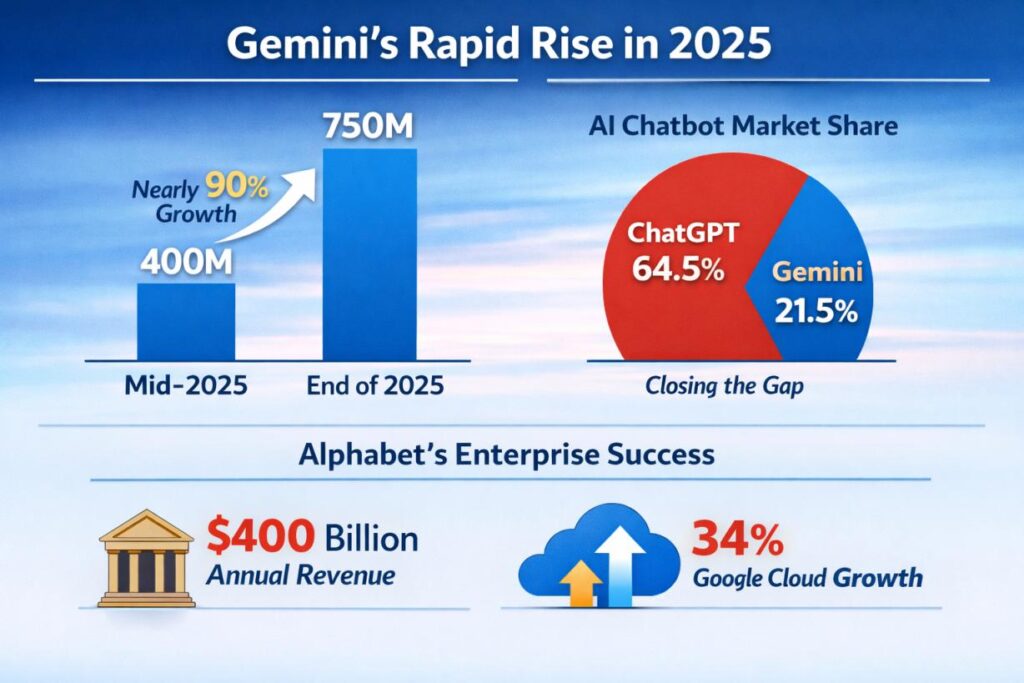
For context on growth: Gemini had roughly 400 million monthly users in mid-2025. It hit 750 million by year’s end. That’s nearly 90% growth in under a year — making it one of the fastest-scaling AI platforms in history.
Market share: Gemini holds about 21.5% of global AI chatbot web traffic, versus ChatGPT’s 64.5%. Still number two — but the gap is closing, and the growth rate tells a very different story.
And on the enterprise side: Alphabet crossed $400 billion in annual revenue for the first time, with Google Cloud growing 34% year-over-year — heavily driven by demand for Gemini-powered services.
What Is Google Gemini?
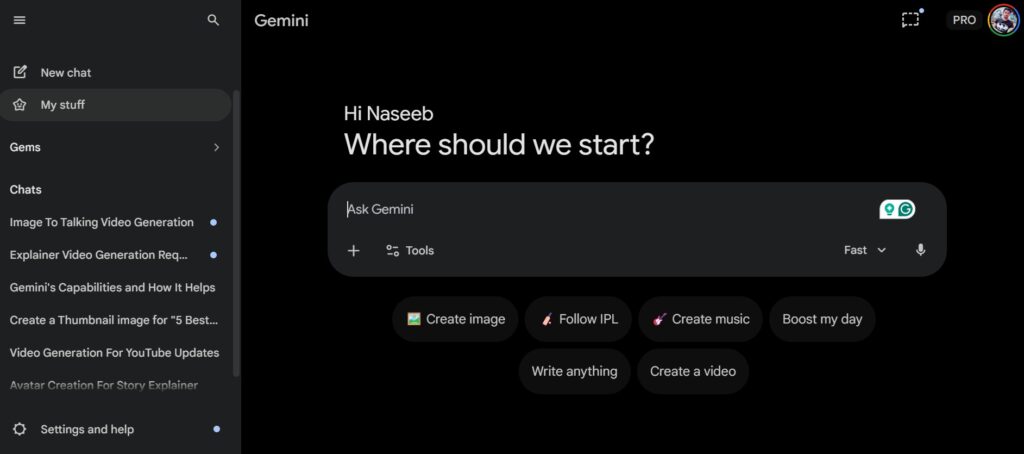
Google Gemini is a family of multimodal large language models developed by Google DeepMind. It was built from the ground up to handle not just text, but images, audio, video, and code — all in a single, unified architecture.
This is different from AI models that were trained on text first and then awkwardly bolted on vision capabilities later.
In March 2023, Google launched a chatbot called Bard as a rushed response to the viral explosion of ChatGPT. It was… rough. Within hours of launch, it had already given a factually wrong answer in its own promotional material, a very public stumble.
But Google kept building, and in February 2024, they rebranded the whole thing as Gemini and integrated it across virtually every product they make — Google Search, Gmail, Google Docs, Sheets, Slides, Meet, Android, Chrome, Maps, and even cars through a GM partnership.
Today, there are multiple tiers of Gemini models — Flash for speed and everyday tasks, Pro for advanced reasoning, and the Ultra-tier for maximum capability — along with an entire developer API ecosystem.
Features — What Can Gemini Actually Do?
Okay, now the fun part. Let’s walk through what Gemini actually does — and I mean actually does, not just marketing speak.
1. True Native Multimodality
Most AI models were trained on text, then taught to understand images. It was built from scratch on text, images, video, code, and audio simultaneously. This makes a real difference. You can upload a 45-minute video and ask Gemini to find a specific 1-second moment in it. You can drop in a PDF of financial data and have it analyzed alongside a spoken question. You can paste in an image of a whiteboard from a meeting and ask it to turn that into a structured action plan. This is genuinely different from what most competitors can do.
2. The 2 Million Token Context Window
This is arguably Gemini’s most significant technical advantage right now. A ‘context window’ is how much information the AI can hold in its ‘working memory’ at once. ChatGPT’s best consumer model tops out at around 128,000 tokens. Claude’s standard context is 200,000. Gemini’s context window goes up to 2 million tokens — that’s equivalent to roughly 1,500 pages of text, or 30,000 lines of code. In practice, this means you can drop in an entire codebase, a book, or years of documents and have a coherent conversation about all of it.
3. Deep Google Workspace Integration
This is where Gemini genuinely beats every other AI assistant. In Gmail, Gemini can summarize your inbox, draft replies in your voice, flag what’s overdue, and now, with AI Overviews in Gmail search, give you an immediate answer to ‘what did my client say about the budget last month?’ without opening a single email. In Google Docs, Gemini can write, refine, and restructure your documents with full access to your Drive files. In Sheets, you can write formulas, clean data, and build charts from natural language. In Meet, you can take notes and summarize your meetings. No other AI assistant has this depth of integration across a full productivity suite.
4. Deep Research / Deep Search
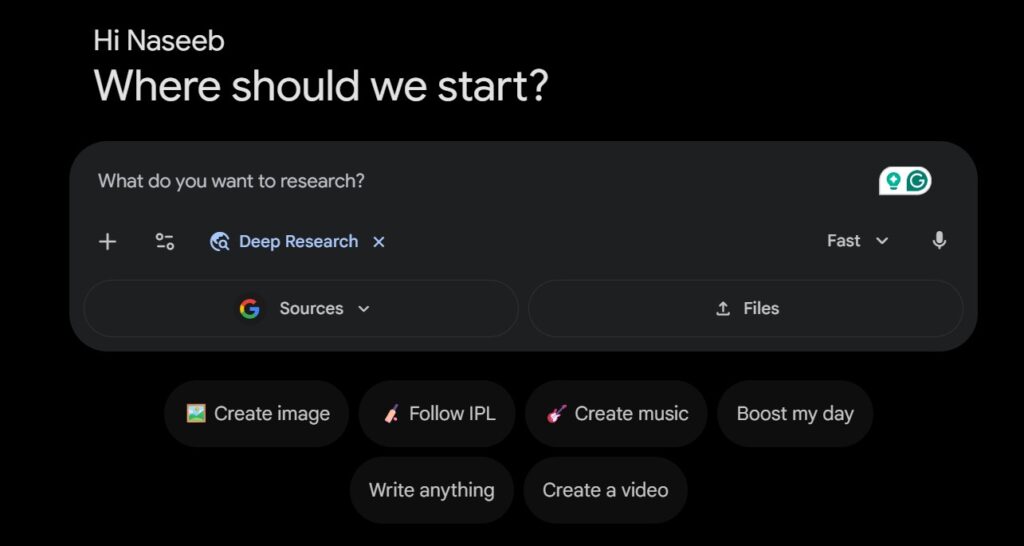
This feature is a genuine competitor to services like Perplexity. Deep Research sends Gemini on a multi-step research mission; it reads hundreds of pages across the web in real time, cross-references sources, and delivers a condensed, cited report. Paid users get significantly more research sessions. Pro and Ultra users also access ‘Deep Think,’ an extended reasoning mode where Gemini shows its work on complex math, science, and logic problems.
5. Personal Intelligence (Opt-In)
One of Gemini’s newer and more powerful features. If you opt in, Gemini can draw on your Gmail, Google Photos, Google Calendar, and search history to personalize its responses. This enables it to remind you about commitments you made in emails, pull relevant context from your past, or suggest follow-ups based on your schedule.
6. Gemini Live — Real-Time Voice Conversations
Gemini Live allows real-time, back-and-forth spoken conversation with the AI, not just dictation, but natural dialogue where you can interrupt, redirect, and have a real conversation. It’s now available on Nest devices and is being expanded to more smart home hardware.
7. Jules — The Coding Agent
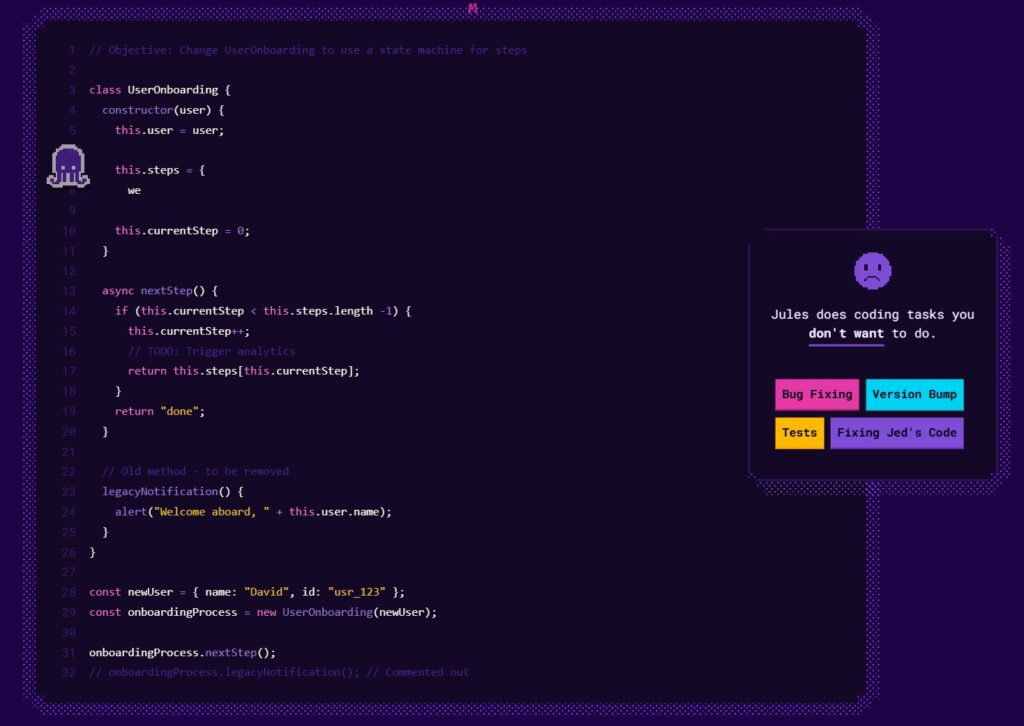
Jules is Google’s asynchronous coding agent. You give it a task — fix this bug, implement this feature, refactor this module, and it goes away, works in the background across your GitHub repository, implements changes, and opens a pull request. Free users get limited access; Pro users get 5x higher limits; Ultra users get 20x. It competes directly with GitHub Copilot and tools like Cursor.
8. Image & Video Generation
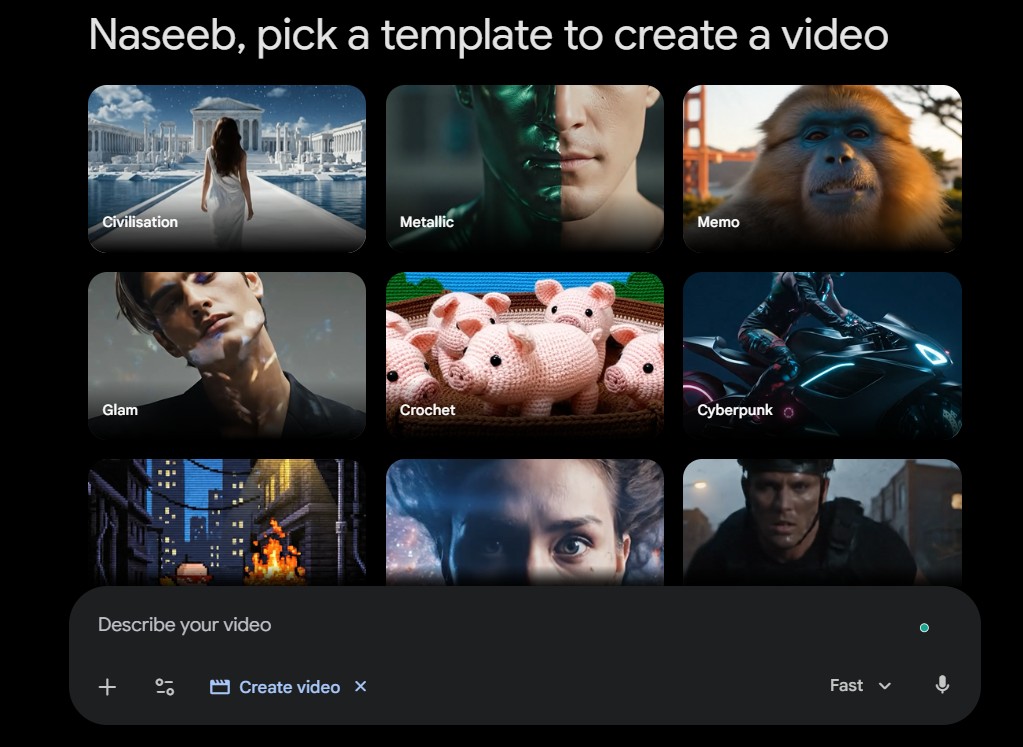
Gemini integrates Imagen for image generation and Veo 3 for video generation. Veo offers free video creation for 3 videos per day. Veo is one of the most capable video generation models available, producing high-quality short clips from text or image prompts. Whisk for photo-to-video animation, and Flow for full AI filmmaking workflows
9. Google Maps Integration
Gemini now replaces Google Assistant during navigation in Google Maps. Instead of rigid voice commands, you can ask multi-layered, conversational questions like: ‘Is there a budget-friendly vegan restaurant within two miles of my route that’s open right now?’ and follow up naturally. It’s a fundamentally more useful driving companion.
10. NotebookLM — The Research Companion
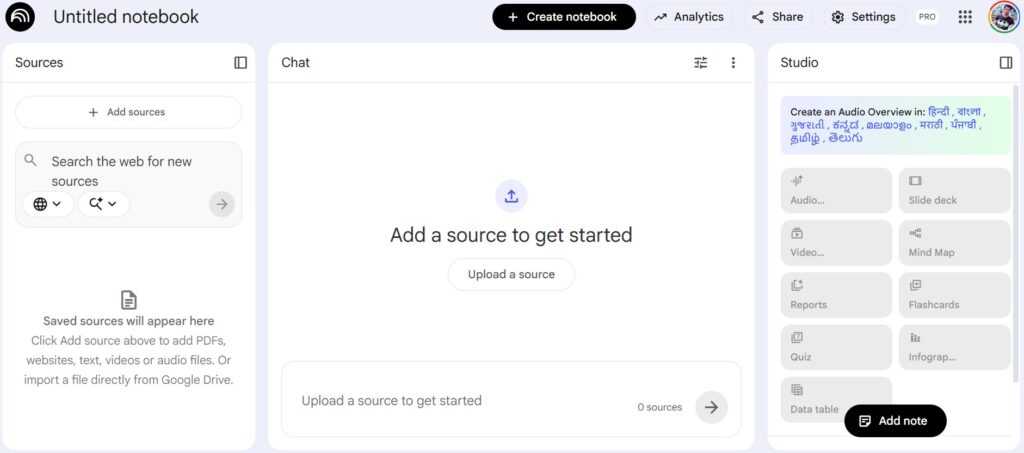
NotebookLM, which runs on Gemini, deserves its own mention. You upload your documents, research papers, or notes, and it creates a personalized AI assistant that only knows about those specific sources. It can generate audio summaries — and now video summaries — from your materials in styles ranging from watercolour illustrations to anime. Pro users get up to 500 notebooks with 300 sources each.
Pros and Cons
| Pros ✅ | Cons ❌ |
|---|---|
| Deep integration with Google Workspace (Gmail, Docs, Drive, etc.) | Creative writing is weaker vs ChatGPT & Claude |
| Huge 2M token context window (great for large data & code) | Strict safety filters can feel limiting |
| Real-time web access in all tiers (more accurate answers) | Confusing product names & pricing structure |
| Powerful and useful free tier | Works best only inside Google ecosystem |
| Strong benchmark performance (coding, math, reasoning) | Free users may have data privacy concerns |
| Advanced multimodal video understanding | Coding still slightly behind top competitors |
| Proven productivity boost (saves ~105 mins/week) | Enterprise costs can become expensive |
Pricing — What Does Gemini Actually Cost?
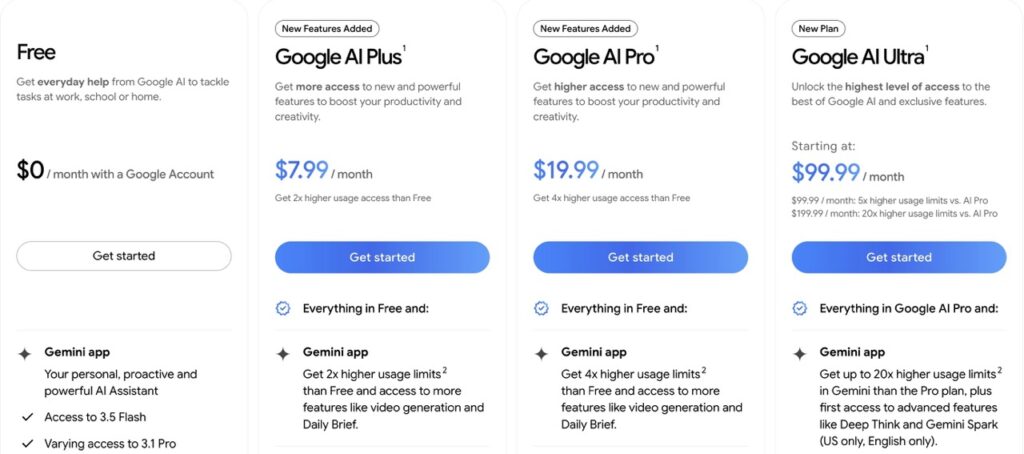
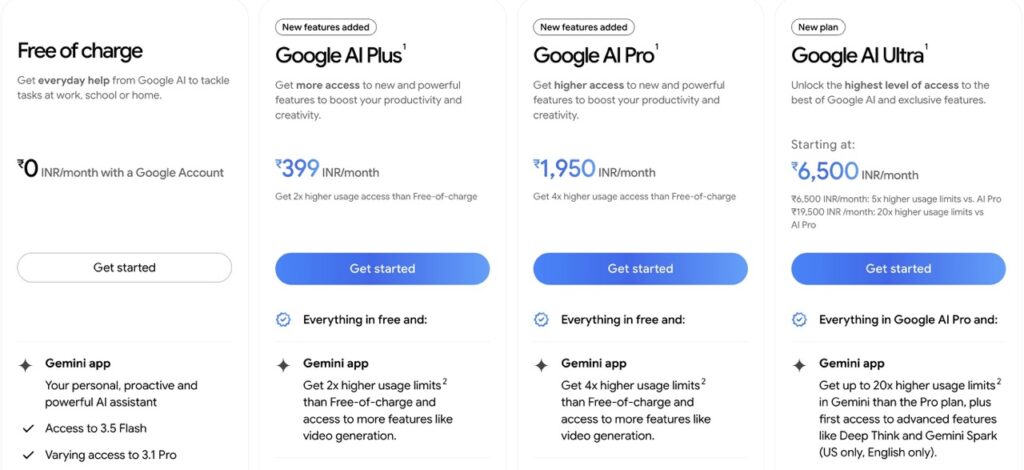
Let’s talk plans because Gemini’s pricing structure has changed significantly and can honestly be confusing. Let me break it down clearly.
| Plan | Price | Best For | Key Features |
|---|---|---|---|
| Free Tier | Free | Casual users | Access to Gemini Flash, daily limits for Thinking mode, image generation, basic Deep Research |
| Google AI Plus | $7.99/month (US) INR 399/month (India) | Regular users | Higher usage limits, 2TB Google One storage |
| Google AI Pro | $19.99/month (US) INR 1950/month (India) | Power users/professionals | Gemini 3 Pro access, 1,000 AI credits, 2TB storage, works inside Gmail/Docs/Sheets/Meet, Deep Research, Jules (coding agent), NotebookLM Pro, 1st month free |
| Google AI Ultra | $200/month (US) INR 19500/month (India) | Access to Gemini Flash, daily limits for Thinking mode, image generation, and basic Deep Research | Everything in Pro + 25,000 AI credits, 30TB storage, YouTube Premium, Deep Think mode, Project Mariner, Veo 3 (video), Flow (filmmaking), 20x Jules limits |
| Enterprise / Workspace Add-ons | ~$26–$54/user/month (incl. Workspace) | Businesses | Works with Google Workspace, admin controls, compliance, data privacy, not standalone (requires Workspace plan) |
| Developer API Pricing | Usage-based (token pricing) | Developers | Serious users/creators |
Use Cases — Who Is Gemini Actually Best For?
Let’s get practical. Who should actually be using Gemini?
Knowledge Workers in Google Workspace
This is Gemini’s single strongest use case, and it’s not close. If you live in Gmail and Google Docs, Gemini is a no-brainer upgrade. Drafting replies, summarizing email threads, building documents from scratch, creating spreadsheet formulas, summarizing meeting recordings in Meet all of this happens seamlessly without context-switching to a separate AI tool.
Researchers and Analysts
Deep Research, NotebookLM, and the 2-million-token context window make Gemini exceptional for research-heavy workflows. Upload 50 papers. Analyze a 400-page report. Cross-reference multiple sources. Generate a cited summary. Then export it directly to a Google Doc. The pipeline is frictionless.
Developers and Engineers
Between Gemini Code Assist (integrated into VS Code, JetBrains, and Android Studio), Jules for async coding workflows, and the generous free tier of 6,000 daily code completions, Gemini is a serious developer tool. The 2M token context window is particularly valuable for engineers dealing with large codebases.
Content Creators
Veo 3 for video generation, Imagen for images, Whisk for photo-to-video animation, and Flow for full AI filmmaking workflows, Gemini has assembled a creative suite at the Pro and Ultra tiers that’s hard to match. The $249.99 Ultra tier is steep, but it bundles tools that would otherwise cost hundreds more in standalone subscriptions.
Students
Gemini’s integration with Google Classroom, deep research capabilities, math and science benchmark performance, and free tier make it genuinely useful for academic work. Google has also offered free one-year Pro upgrades to students in several countries.
Smart Home and Mobile Users
With Gemini replacing Google Assistant on Nest devices, Android Auto, and expanding to smart speakers and displays globally in 2026, it’s becoming the default AI layer for hundreds of millions of Android device owners — whether they signed up or not.
Enterprises Standardized on Google Cloud
With 70% of Google Cloud customers now using Gemini, and adoption across 120,000+ enterprises, the enterprise case is clear. Cloud customers get strong cost/use synergy since Gemini is already embedded in their existing infrastructure.
Google Gemini Monthly Active Users
As of February 2026, Gemini has rapidly evolved into one of the most widely used AI platforms in the world. The latest usage data highlights not just growth, but massive scale across multiple touchpoints.
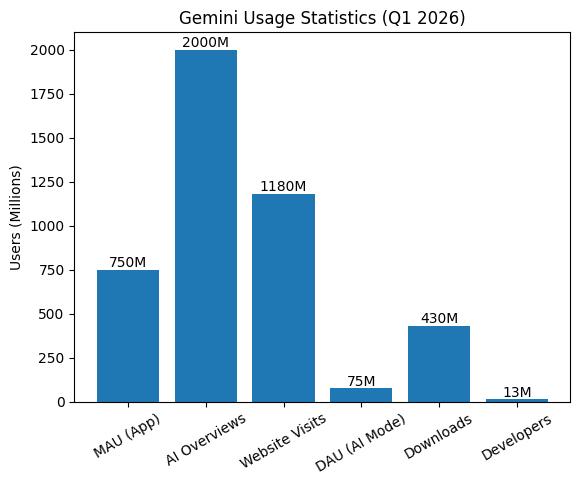
- 750+ Million Monthly Active Users (App)
- 2 Billion AI Overviews Users via Google Search
- 1.18 Billion Monthly Website Visits
- 75 Million Daily Active Users (AI Mode)
- 430+ Million Downloads
- 13 Million Developers ecosystem is building apps, tools, and integrations using Gemini models.
Gemini Search Volume & Market Interest
A quick note on search demand, because it tells us something about how real the interest is. Gemini search volume grew 157% during 2025, making it the fastest-growing major generative AI website by the end of the year.
In February 2026, Gemini was seeing approximately 27 million app downloads per month, placing it among the top five most downloaded apps globally. The 25-to-34 age bracket represents the largest share of Gemini’s user base, with a roughly 57% male, 43% female audience split.
Traffic is primarily direct, meaning people are typing Gemini into their browser intentionally, not just discovering it through search.
Gemini Revenue & Valuation
Now, what about the money? Google doesn’t break out Gemini’s revenue as a standalone number; it’s embedded across multiple business lines. But we can read the signals clearly.
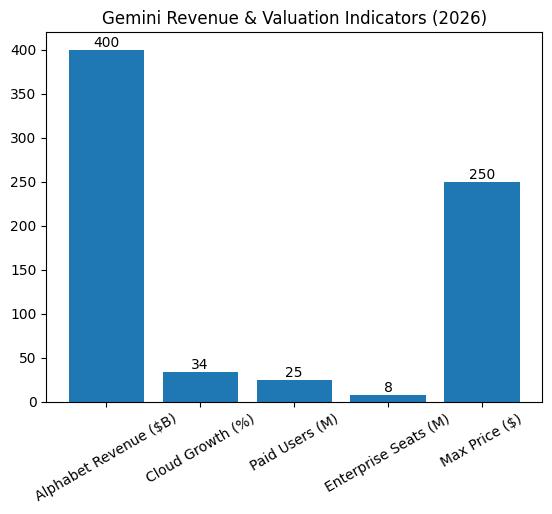
Gemini & Alphabet Growth Insights (2025–2026)
- Alphabet crossed $400 billion annual revenue in 2025 (first time)
- Google Cloud grew 34% YoY, largely driven by Gemini services
- An estimated 15–25 million paid AI users (Pro, Ultra, Enterprise)
- Over 8 million enterprise seats already in use
- Pricing ranges from $20 to $200 per user/month
- Subscription revenue is significant, though exact numbers are not disclosed
Market & Analyst Insights
- Morgan Stanley maintains an overweight rating on Alphabet
- Gemini is expected to drive a new growth cycle in cloud & consumer AI
- Alphabet stock is up ~18% in 2026 (YTD)
- Performance is better than the overall tech sector
Alternatives — How Does Gemini Compare?
Let’s be fair and compare Gemini to its main rivals in 2026.
ChatGPT (OpenAI)
ChatGPT remains the market leader by pure brand recognition and traffic share, 64.5% of global AI chatbot web traffic versus Gemini’s 21.5%. GPT-5.4 is a fierce competitor, scoring very high on reasoning and coding benchmarks, with a strong developer ecosystem and extensive plugin support. ChatGPT Plus is $20/month — the same as Gemini Pro.
- Where ChatGPT wins: creative writing, brand familiarity, and the broadest plugin/tool ecosystem.
- Where Gemini wins: Google ecosystem integration, larger context window, and better video understanding. Complete review of ChatGPT
Claude (Anthropic)
Claude Opus 4.6 is widely considered the gold standard for nuanced reasoning, creative writing, and long-form analysis. It supports up to a 1 million token context window and consistently ranks at or near the top on coding and reasoning benchmarks. Claude’s tone is warmer and more conversational than Gemini’s.
- Where Claude wins: creative writing, nuanced analysis, coding quality.
- Where Gemini wins: Google ecosystem integration, free tier generosity, video processing, and sheer scale of distribution. Why is Claude famous for?
Microsoft Copilot
If your company runs Microsoft 365 rather than Google Workspace, Copilot is Gemini’s most direct enterprise alternative. It integrates with Word, Excel, Teams, Outlook, and Azure the same way Gemini integrates with Google’s stack. Copilot is powered by GPT-5 models. The competition here is largely about which ecosystem your company is already invested in. Read about Microsoft Copilot: Features, Stats, Price & Revenue.
Grok (xAI)
Grok 4 from Elon Musk’s xAI has emerged as a strong competitor in 2026, described by xAI as its most intelligent model. It has a different personality and content policy from Gemini, notably less restrictive. It’s deeply integrated with X (formerly Twitter) for social media use cases.
- Where Grok wins: fewer content restrictions, X integration.
- Where Gemini wins: everything related to productivity, research, and the Google ecosystem.
DeepSeek
DeepSeek models are among the most affordable frontier-class models available, often a fraction of Gemini’s API costs. Many models are open-source, meaning developers can self-host.
- Where DeepSeek wins: cost leadership and open access.
- Where Gemini wins: safety, ecosystem integration, and enterprise support.
- Key consideration: data sovereignty and privacy are real concerns with DeepSeek for businesses.
Perplexity AI
Perplexity is primarily a search-focused AI. If you want an AI that cites sources for every answer with deep web research, it’s excellent. Gemini’s Deep Research mode directly competes with Perplexity’s strength. Perplexity is lighter and faster for pure search; Gemini offers much more breadth with its multimodal and productivity features.
>>> Claude vs ChatGPT vs Gemini (2026): Which AI Chatbot Is Best?
Conclusion: Is Gemini Worth It in 2026?
Gemini has become one of the most powerful and fast-growing AI tools in 2026.
- If you use Google Workspace (Gmail, Docs, Drive) → Gemini is the best choice for productivity
- For developers → it offers strong pricing + huge context window
- For creators → the Ultra plan gives unmatched tools (video, images, AI filmmaking)
However:
- ChatGPT is still better for general use & plugins
- Claude is stronger in creative writing
- Copilot is better for Microsoft users
Gemini may not be perfect, but its integration, growth, and capabilities make it one of the top AI platforms to watch in 2026.
👉 Recommendation:
Start with the free version → upgrade to Pro if you use Google tools regularly.
Ta! Da!

About Naseeb Akhter
The founder of BotBunch, where he researches, tests, and reviews the latest AI tools, automation software, and SaaS platforms. Along with the BotBunch editorial team, he helps creators, students, professionals, and businesses discover the best AI solutions through hands-on testing, honest reviews, detailed comparisons, and easy-to-follow guides.
Join us via email and social channels to get the latest updates straight to your inbox.