We all know about ChatGPT. It, released by OpenAI in November 2022, is widely recognized as the first AI chatbot to gain massive, mainstream popularity, reaching over 100 million users in just two months.
From students to bloggers, freelancers to businesses, everyone is using it to save time and boost productivity.
Key Stats
- ChatGPT reached 1 million users in just 5 days of launch
- Records nearly 1.5 billion visits per day (as of April 2026)
- ChatGPT has 900 million weekly active users currently
- Gets around 5.6 billion monthly visits on ChatGPT.com
- OpenAI’s ChatGPT is generating approximately $2 billion in monthly revenue (as of early 2026)
- OpenAI (parent company of ChatGPT) has achieved a massive $852 billion valuation following a record-breaking $122 billion funding round (as of early 2026).
- Available on Web, Android, iOS, Windows, macOS
What Is ChatGPT?
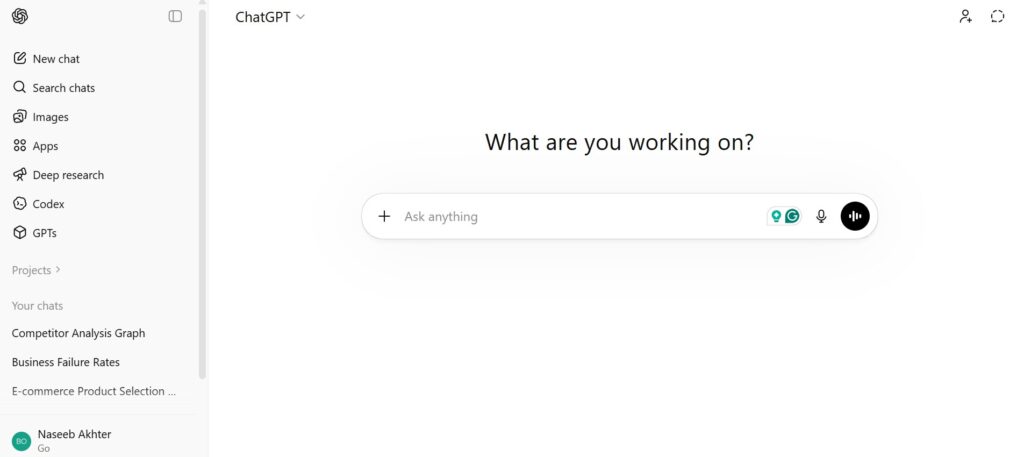
ChatGPT is an AI chatbot developed by OpenAI, launched in November 2022. The name stands for Chat Generative Pre-trained Transformer.
At its core, it’s a large language model (LLM) trained on massive amounts of text data, books, websites, articles, and more, that learned to understand and generate human-like text by predicting what words should come next in a sequence.
As like, It acts like a smart virtual assistant that helps you write, learn, solve problems, and get answers instantly.
ChatGPT Features
- Natural language understanding: Understands plain conversational English (and 50+ other languages), so you never need to learn special commands or syntax, just talk to it like a person.
- Multimodal input: Accepts text, images, files, and audio as input. Upload a photo, a PDF, a spreadsheet, or a screenshot, ChatGPT can read, analyse, and respond to all of them.
- Code generation & debugging: Writes, explains, and debugs code across Python, JavaScript, SQL, HTML, and dozens more languages. Paste an error message, and it diagnoses the fix instantly.
- Real-time web browsing: Can browse the internet to fetch current news, prices, research, and live data, going beyond its training cutoff to answer time-sensitive questions accurately.
- Memory across conversations: Remembers facts about you, your job, preferences, writing style, ongoing projects, across separate chat sessions, so you never have to repeat yourself.
- Image generation (DALL·E): Creates original images from text descriptions using DALL·E 3. Describe a scene, a logo concept, or an illustration style, and get a ready-to-use image in seconds.
- Advanced voice mode: Two-way spoken conversation with low latency, natural pacing, and emotional tone detection. Supports interruptions mid-sentence, feels closer to a phone call than a chatbot.
- Advanced data analysis: Uploads and processes Excel, CSV, and data files to run calculations, generate charts, spot trends, and summarise insights, no spreadsheet skills required.
- Custom GPTs: Build or use purpose-built AI assistants tuned for specific tasks, a legal document drafter, a recipe creator, a study tutor — with custom instructions and uploaded knowledge.
- Multilingual support: Reads, writes, and converses fluently in over 50 languages including Hindi, Arabic, French, Spanish, Japanese, and Portuguese, with no special setup needed.
- API access: Developers can integrate ChatGPT’s capabilities into their own apps, websites, and workflows via OpenAI’s REST API, with pay-as-you-go pricing and free starter credits.
- Reasoning models (o3 / o1): Access to OpenAI’s “thinking” models that pause to reason step-by-step before answering, dramatically more accurate on maths, logic puzzles, science, and complex analysis.
>>> 15 Best AI Text Generators for SEO Content in 2026 (Tried & Tested)
Pros & Cons
Pros
- Available 24/7, instantly: No waiting, no appointments. ChatGPT responds in seconds at any time of day, making it a genuinely always-on assistant for work, study, or creativity.
- Handles a huge range of tasks: Writing, coding, summarising, translating, maths, research, brainstorming, few tools match its breadth. One subscription replaces several niche tools.
- Free tier is genuinely useful: Unlike many AI tools, the free version is not a stripped demo, it provides real access to GPT-4o for everyday tasks with no credit card required.
- Massive productivity boost: Studies show users complete tasks 25–40% faster when assisted by ChatGPT, particularly for writing, coding, and data analysis workflows.
- Explains complex topics simply: It can break down anything, from quantum physics to tax law, in plain language tailored to your level. A genuinely effective learning companion.
- Strong coding capabilities: Writes, reviews, and debugs code in 30+ languages. Particularly valuable for beginners learning to code and professionals handling repetitive dev tasks.
- Multilingual — 50+ languages: Reads and writes fluently in dozens of languages, making it accessible globally and useful for translation, localisation, and cross-language content work.
- Continuously improving: OpenAI ships regular model updates. Features that required a paid plan a year ago (like web browsing) are now available for free — the platform only gets better over time.
- Multimodal input support: Accepts text, images, PDFs, spreadsheets, and audio — allowing users to work with real documents and files rather than just typing text queries.
Cons
- Hallucinations — it can be confidently wrong: ChatGPT sometimes generates plausible-sounding but factually incorrect information, especially for niche topics, statistics, and citations. Always verify critical facts.
- Knowledge cutoff limitations: Without web browsing enabled, it has no knowledge of events after its training cutoff. Users asking about recent news or new releases may get outdated answers.
- Privacy concerns: Conversations may be used to train future models by default. Sharing sensitive business, medical, or personal data with ChatGPT carries real privacy risks if not managed.
- Free tier is increasingly limited: Usage caps, slower responses at peak hours, and the addition of ads in 2026 mean the free experience is noticeably degraded compared to paid tiers.
- Risk of over-reliance: Students and professionals who depend on ChatGPT too heavily may see their own skills atrophy. It can also produce an illusion of competence when reviewing AI-generated work uncritically.
- No genuine reasoning or understanding: ChatGPT predicts likely next words — it does not truly understand, reason, or have opinions. This limitation shows most on complex logical puzzles and nuanced judgment calls.
- Inconsistent output quality: The same prompt can produce varying quality responses across sessions. Professional or high-stakes use requires careful review and iteration, not just copy-pasting.
- Can be sycophantic: Research shows ChatGPT tends to agree with users even when they are wrong. It may validate bad ideas rather than push back — requiring users to actively ask for critical feedback.
- Potential for misuse: ChatGPT can be — and is — used to generate spam, misinformation, academic dishonesty, and phishing content, raising broader ethical concerns about AI-generated content at scale.
Use Cases: Who Is Using ChatGPT?
With 900 million weekly active users across the globe, ChatGPT is no longer just a tech enthusiast’s toy. It has become a daily tool for students, professionals, creators, and enterprises, each using it in remarkably different ways.
- Students: The single largest user group, 42% of ChatGPT users are under 25. Students use it as a round-the-clock tutor, writing assistant, and research companion.
- Content creators & writers: Writing is the most common task on ChatGPT by far. Creators use it to scale their output, beat writer’s block, and repurpose content across formats.
- Software developers: Developers were among ChatGPT’s earliest and most loyal adopters. It functions as a pair programmer, documentation writer, and debugging partner — available 24/7.
- Business owners & marketers: Small businesses and marketing teams use ChatGPT to reduce operational costs, automate repetitive tasks, and punch above their weight without hiring specialists.
- Healthcare & wellness seekers: Over 230 million people ask ChatGPT health-related questions every week, particularly outside clinic hours or in areas with limited healthcare access.
- Researchers & academics: Researchers use ChatGPT to dramatically accelerate literature reviews, data synthesis, and academic writing, while using Pro-tier reasoning for complex analysis.
- HR & recruitment professionals: HR teams use ChatGPT to speed up hiring workflows, craft better job descriptions, and handle the repetitive writing that consumes most of a recruiter’s day.
- Creatives & designers: Creative professionals use ChatGPT as a brainstorming partner, scriptwriter, and image-generation tool, helping them produce more ideas and iterate faster.
Pricing: Is ChatGPT Free?
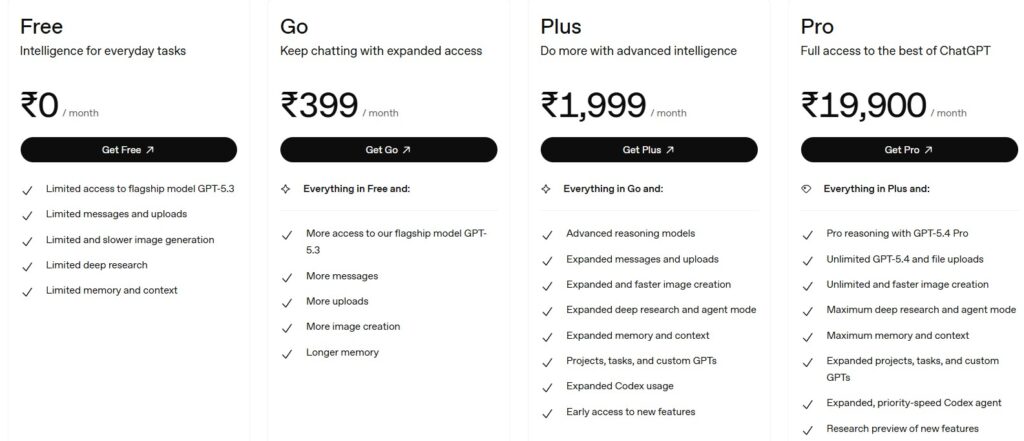
ChatGPT offers multiple pricing plans designed for different users, from beginners to professionals and businesses. Here’s a simple breakdown:
What Does the ChatGPT Free Plan Offer?
The Free plan of ChatGPT is a great starting point for beginners and everyday users. It provides limited access to the flagship AI model, allowing you to experience core features without paying. With the free version, you can send messages, generate basic content, and get help with writing, learning, or simple tasks. It also includes limited image generation, basic file uploads, and web browsing capabilities. However, usage limits apply, meaning responses may be slower during peak times, and features like deep research, memory, and advanced tools are restricted.
The Go plan costs around ₹399/month and provides higher usage limits, more uploads, and improved memory.
The Plus plan at ₹1,999/month is the most popular option, offering advanced AI models, faster performance, and additional features like deep research, image generation, and custom GPTs.
For heavy users, the Pro plan is priced at ₹19,900/month and includes unlimited access, powerful reasoning models, maximum memory, and priority features.
Team & Organisation Plans
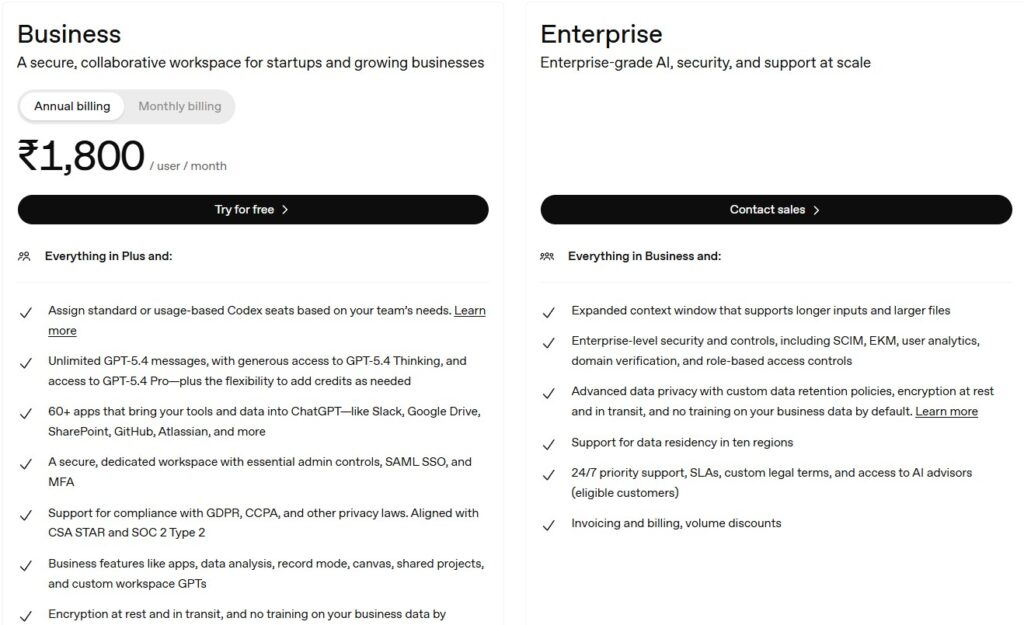
For teams and organizations, Business plans start at approximately ₹1,800 per user/month, offering secure collaboration, admin controls, integrations (like Slack, Google Drive, GitHub), and compliance features.
Larger companies can opt for the Enterprise plan (custom pricing), which includes advanced security, extended context windows, data residency options, and dedicated 24/7 support.
There are also Education plans that are free or discounted for students, teachers, and universities, making AI more accessible in the academic sector.
ChatGPT Monthly Active Users
According to the latest data, ChatGPT AI has around 1.6 billion monthly active users worldwide as of March 2026.
Here’s a detailed table with ChatGPT AI’s number of website monthly active users over time since May 2025
| Month | Monthly Active Users |
|---|---|
| May (2025) | 68.7 million |
| June (2025) | 71.6 million |
| July (2025) | 82.1 million |
| August (2025) | 258 million |
| September (2025) | 313 million |
| October (2025) | 324 million |
| November (2025) | 332.7 million |
| December (2025) | 374.8 million |
| January (2026) | 427 million |
| February (2026) | 426 million |
| March (2026) | 425 million |
| April (2026) | 1.6 billion |
ChatGPT Search Volume
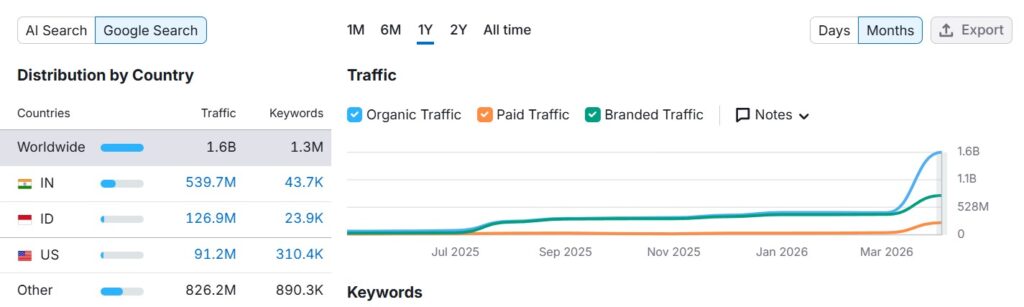
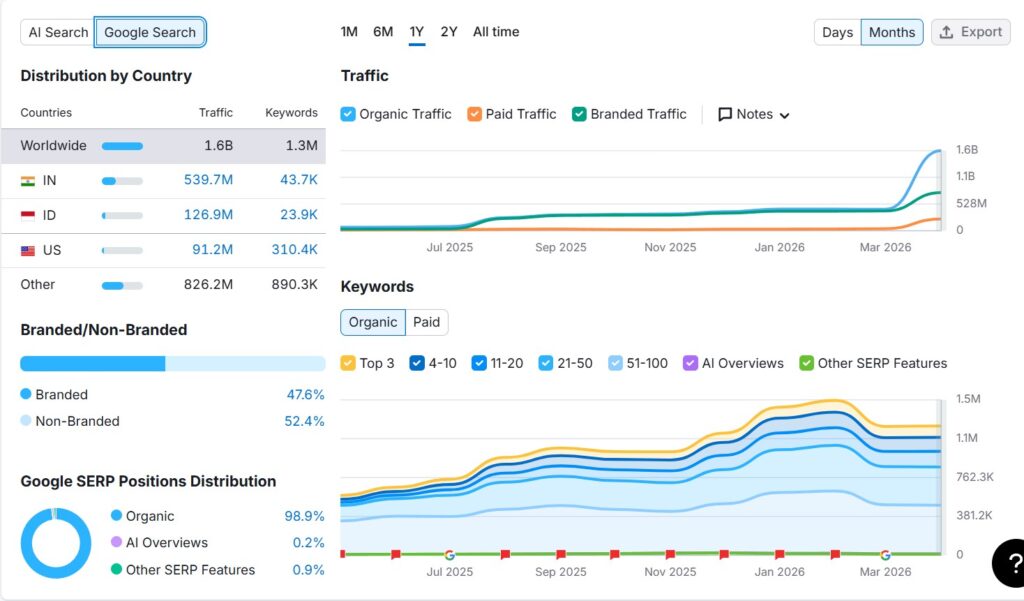
The search volume of ChatGPT shows how popular and in-demand the tool has become worldwide. Based on the data, ChatGPT receives massive search traffic, with around 1.6 billion total visits globally and over 1.3 million ranking keywords. It clearly shows that it is one of the most searched AI tools in the world.
Traffic Growth Trend
ChatGPT’s search traffic has grown steadily over time, with a huge spike in early 2026. This shows that more people are searching for AI tools and using ChatGPT daily for work, study, and content creation.
Country-wise Traffic
- India: ~539.7M visits (one of the biggest user bases)
- Indonesia: ~126.9M visits
- United States: ~91.2M visits
- Other countries also contribute a large share
Organic vs Paid Traffic
Most of the traffic comes from organic search (SEO), meaning users are finding ChatGPT naturally through Google rather than ads. Paid traffic is very low in comparison.
Branded vs Non-Branded Searches
- Branded searches: ~47.6%
- Non-branded searches: ~52.4%
Keyword Rankings
ChatGPT ranks for a large number of keywords across different positions on Google. A big portion of keywords falls in the top 10–50 positions, helping drive consistent traffic.
ChatGPT Revenue & Valuation
Based on the latest data, ChatGPT, developed by OpenAI, is growing extremely fast in terms of revenue and value.
Revenue Growth
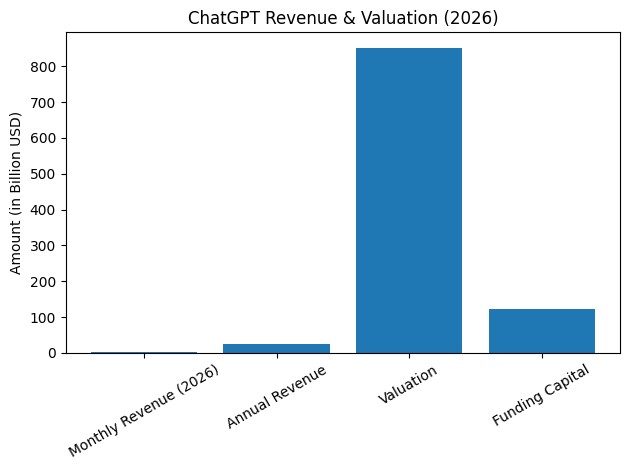
- ChatGPT is making around $2 billion every month
- That equals about $24 billion per year
- It reached $1 billion revenue within just 1 year of launch
- By the end of 2024, it was already earning $1 billion per quarter
Company Valuation & Funding
- OpenAI is valued at around $852 billion
- It has raised about $122 billion in funding